



When Your Computer Remembers Everything
Rewind AI does something deceptively simple: it records everything that happens on your screen, transcribes your meetings, and lets you search back through your day as if your computer had a perfect memory. The pitch is personal AI built on your actual context – not a general-purpose assistant that knows nothing about you, but a system that watched you work and can answer questions based on what it saw. That framing, quiet and utilitarian, is starting to land hard with a specific kind of power user.
Notion, meanwhile, has spent the past year building out its own AI memory layer – a feature set designed to let its workspace tool remember notes, decisions, and documents and surface them intelligently during work. Both products are chasing the same behavioral shift: people want their tools to retain context so they don’t have to. The overlap is narrower than it looks on paper, but in practice it is starting to create real friction for Notion’s stickiest use case.

What Rewind Actually Does Differently
Rewind’s approach is fundamentally local. The recording, compression, and indexing happen on-device, which lets the company sidestep the privacy objections that would otherwise kill the product in enterprise conversations. That architecture decision is not just a feature – it is the reason the product is allowed to exist at scale. A cloud-first version of the same idea would have been strangled by IT departments and legal teams before it reached a hundred users.
The product’s search interface lets users pull up what they were looking at three weeks ago, what was said in a specific meeting, or what a document said before it was edited. That is a different category of recall than Notion’s AI, which operates within the boundaries of what you have explicitly saved. Rewind does not require you to save anything. It just watches, compresses, and indexes. The friction it removes is not search – it is capture.
That distinction matters more than it sounds. A huge portion of knowledge work is lost not because people forget to think, but because they forget to document. Rewind is built on the premise that documentation itself is the bottleneck, and that removing it entirely is more valuable than making documentation smarter. Notion’s entire product philosophy points in the opposite direction – it rewards users who build structured systems, who tag and organize and create databases. Rewind rewards users who want to stop doing any of that.

Notion’s Memory Problem
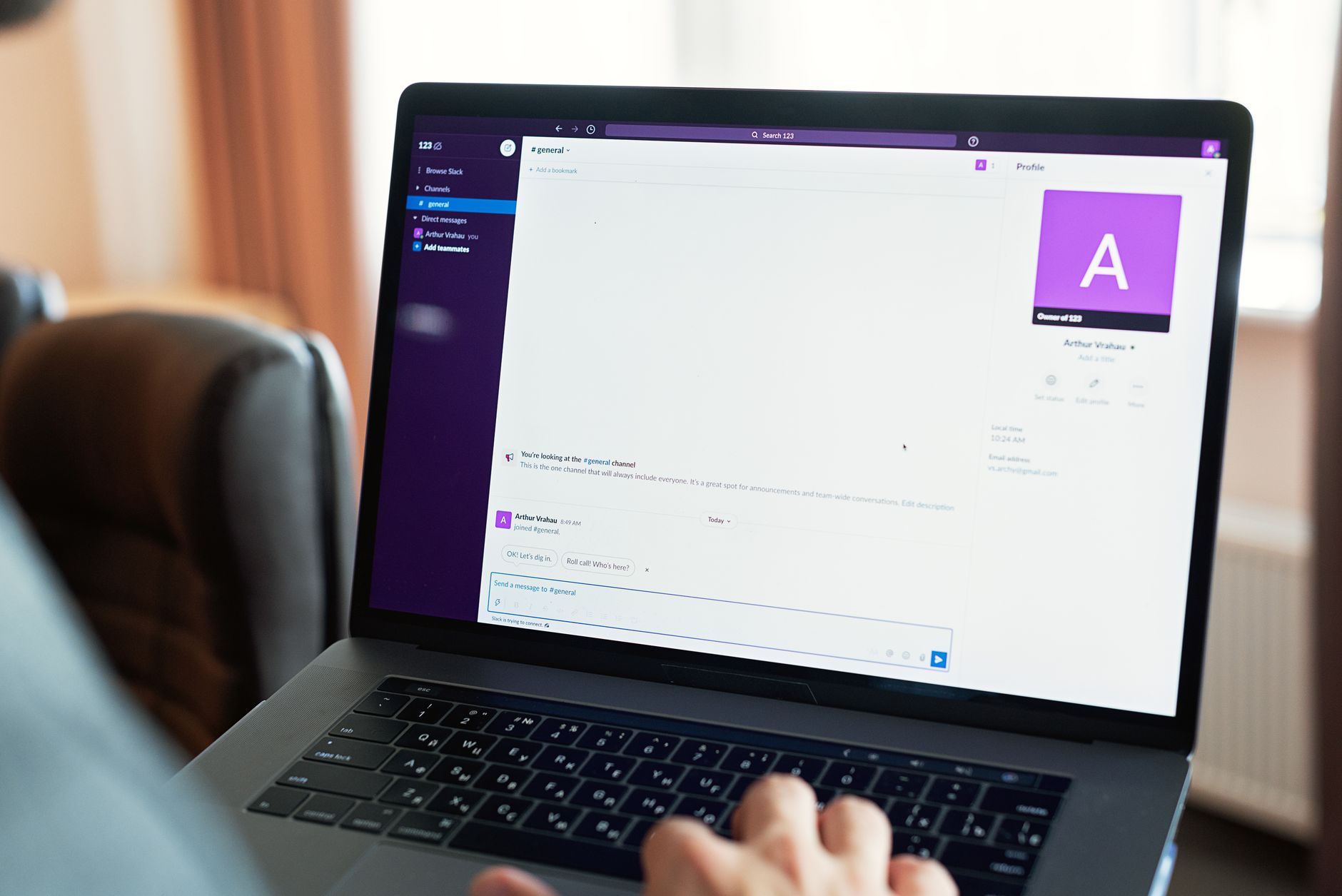
Notion’s AI features are genuinely impressive within the product’s own walls. They can summarize databases, draft from templates, pull up related pages, and answer questions about stored content. The limitation is the phrase “stored content” – Notion’s AI only knows what lives in Notion. If you discussed something on a Zoom call, sent a follow-up in Slack, and then made a decision in a Google Doc, Notion’s memory has a gap. It is not a flaw in execution – it is a structural constraint of being a single-application AI layer.
That gap is exactly where Rewind competes. Users who rely on Notion for project management and documentation are still losing context every time important decisions happen outside the workspace. Rewind’s whole-screen approach captures those gaps by design. The competitive pressure is not that Rewind is building a better Notion – it is that Rewind is making the boundaries of any single application feel like a liability.
The Attention Economics of Personal Context
There is a deeper economic logic at work here. The value of any productivity tool is tied to how much of a user’s context it holds. More context means better answers, better suggestions, and higher switching costs. Notion has built its moat by becoming the place where structured knowledge lives. Rewind is trying to build a different kind of moat – one based on behavioral history rather than stored artifacts. If Rewind holds more of your context than any single application, it becomes the meta-layer above everything else.
That positioning has real consequences for how AI assistants compete going forward. Notion can improve its AI indefinitely, but it cannot improve the fact that it only sees what users bring inside it. A tool like Rewind, or any future competitor built on similar whole-device recording architecture, starts with a structural advantage in context richness. The question for Notion is whether its organizational superiority – the databases, the relational structure, the templates – is enough to offset that gap for the users who care most about recall.
For now, the two products are not direct substitutes. Most Rewind users also use Notion. But that coexistence is not permanent. As Rewind’s AI gets better at synthesizing and surfacing recalled information, the need to manually document in a structured workspace becomes less urgent. Some portion of Notion’s daily active use is driven by the habit of capture – writing things down so they are findable later. Rewind attacks that habit at the root.
Notion is aware of the pressure. Its recent product updates have pushed toward deeper integrations with external tools, trying to pull more context into its walls rather than cede that ground to ambient-recording competitors. It has also pushed harder on the project management side of its product, where structured workflow data is harder to replicate by simply watching someone’s screen. Whether that is enough to hold the users who are most sensitive to context loss is a question Notion will need to answer with shipping velocity, not positioning.
The users most at risk of defecting are not casual Notion users – they are the ones who have built the most elaborate systems. Power users who have spent years perfecting their Notion setup are also the most likely to feel the pain of context gaps, because they are the most attentive to what their tools can and cannot do. Rewind’s best customers and Notion’s most committed users are probably the same people.