




For years, the premium Android phone was a Samsung story with a few footnotes attached. Google has been steadily rewriting those footnotes into chapters.
The Advantage Samsung Can’t Easily Copy
Google makes Android, and that fact shapes everything about the Pixel’s pitch. New features tend to show up on Pixel hardware first, and the phone runs the operating system the way its maker intended, without a heavy manufacturer skin layered on top. Samsung’s One UI is polished and packed with options, but it is still an interpretation of someone else’s platform. For buyers who want Android in its most direct form, the Pixel has an obvious appeal.
That advantage has grown sharper as artificial intelligence became the main selling point of flagship phones. Google’s Gemini assistant is woven deep into the Pixel experience, with features like Magic Cue, which surfaces relevant information from your apps at the moment you need it, and Camera Coach, which offers guidance while you frame a shot. Samsung’s Galaxy AI features are well regarded, yet several of its headline tools lean on Google’s own models. That makes for an awkward arrangement: Samsung’s biggest AI selling points are partly powered by its direct competitor.
The silicon story is more complicated. With the Pixel 10 generation, Google’s Tensor G5 chip moved to TSMC manufacturing, a notable break from earlier Tensor generations that were produced by Samsung. Earlier Pixels often trailed Qualcomm’s Snapdragon chips in raw performance tests, and that gap was the easiest criticism to make. Google’s counterargument is that Tensor is built for on-device AI tasks rather than benchmark bragging rights, and for a buyer who mostly cares about smart photo editing, call screening and live translation, that argument holds up better than spec-sheet purists admit.
Pricing finishes the picture. Google positions its Pro models directly against Samsung’s flagships rather than undercutting them, which signals confidence. A few years ago, the Pixel was the clever alternative you bought to save money. Now it asks for the same money as a Galaxy and expects to win the comparison on merit.
Where Samsung Still Holds the High Ground
None of this means Samsung is losing its footing. The company builds its own displays, its own camera sensor combinations and a staggering range of devices, which gives it a hardware depth Google cannot match. The Galaxy S Ultra line, with its 200-megapixel main camera, built-in S Pen and long-range zoom hardware, remains the Android phone for people who want every possible feature in one slab of glass. Google’s Pixel Pro models are more restrained by comparison, and that restraint cuts both ways.
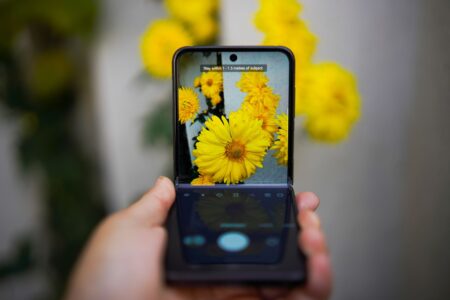
Foldables are the clearest example. Google’s Pixel 10 Pro Fold earned attention for adding an IP68 rating to a book-style foldable, which means real dust and water protection that rivals had not delivered in this category. Samsung answered with the Galaxy Z Fold7, a device so thin and light that it changed the conversation about what a foldable should feel like. Google’s version costs less at $1,799 against $1,999 for Samsung’s, but the Fold7’s slim profile makes it feel like the more refined object in the hand.
Camera quality is where the rivalry gets personal. Pixel phones built their reputation on computational photography, producing good images through software processing rather than through hardware excess. Features like Pro Res Zoom, which uses AI to reconstruct detail at extreme magnification, extend that philosophy. Samsung tends to rely more on sensor resolution and optical reach, then tunes the processing to deliver punchy, saturated results. Neither approach is objectively better, and the preference often comes down to whether you want a photo that looks natural or one that looks ready to post.
Then comes the unglamorous part of the contest: reach. Samsung sells phones in virtually every market through carriers, big-box retailers and its own stores, and its trade-in promotions are a permanent fixture of the shopping calendar. Google’s availability is narrower, and in many regions a Pixel is simply harder to find, try in person and buy with a generous carrier deal. A phone can win every review and still lose the sale if the customer never sees it on a shelf.
Software support used to be a place where Google held a clean advantage. Both companies now promise seven years of updates on their flagship phones, which erases one of the Pixel’s old talking points. It also raises a question Google has to answer sooner than it would like: if the update promise is a tie, what exactly is the reason to switch?
What Buyers Are Actually Weighing

The choice increasingly comes down to temperament rather than specifications. A Pixel suits someone who wants Android to feel clean and helpful, with AI doing small favors in the background. A Galaxy suits someone who wants options, accessories, a stylus, a bigger camera system and a retail experience they already trust. Both are expensive, both are excellent, and the gap between them is smaller than it has ever been.
The real test will arrive when Google’s AI features stop being a novelty and become an expectation. If Samsung can match them on its own terms, the Pixel loses its sharpest edge. If Google can keep shipping software that makes a Galaxy feel one step behind, how long before Samsung’s hardware advantage is no longer enough to justify the premium?