
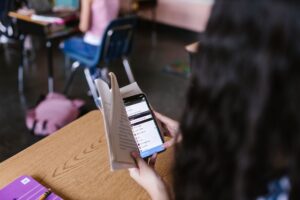




Homeschooling families across America are quietly embracing a digital teaching assistant that never gets tired, never loses patience, and adapts to each child’s learning pace in real-time. AI-powered tutoring apps have surged in popularity among the nation’s estimated 3.7 million homeschooled students, transforming kitchen tables into personalized learning labs equipped with sophisticated educational technology.
The shift represents more than just another ed-tech trend. Parents who already shoulder the full responsibility of their children’s education are discovering that artificial intelligence can fill critical gaps in subjects where they lack expertise, provide instant feedback on assignments, and offer the kind of individualized instruction that traditional classrooms struggle to deliver at scale.
Sarah Chen, a mother of three in Austin, Texas, credits AI tutoring apps with helping her 12-year-old daughter master algebraic concepts that stumped both of them. “I was dreading teaching math beyond basic arithmetic,” Chen admits. “These apps don’t just give answers – they break down problems step by step and adjust when my daughter gets confused.”

The Technology Behind Personalized Learning
Leading AI tutoring platforms like Khan Academy’s Khanmigo, Socratic by Google, and newer entrants like Photomath and Wolfram Alpha leverage natural language processing and machine learning algorithms to create adaptive learning experiences. Unlike traditional educational software that follows predetermined paths, these AI systems analyze student responses in real-time, identifying knowledge gaps and adjusting instruction accordingly.
The technology works by tracking multiple data points: how long students spend on problems, which types of mistakes they make repeatedly, and when they’re most likely to disengage. This creates detailed learning profiles that inform everything from the complexity of the next question to the teaching method most likely to resonate with each individual student.
Khan Academy reports that students using Khanmigo show 18% greater learning gains compared to those using traditional online resources. The AI tutor can explain concepts using different analogies, provide hints without giving away answers, and even engage in Socratic dialogue to help students discover solutions independently.
“We’re seeing AI tutors become genuine teaching partners for homeschooling parents,” explains Dr. Amanda Rodriguez, an educational technology researcher at Stanford University. “They’re not replacing human instruction but augmenting it in ways that weren’t possible even five years ago.”
Addressing the Expertise Gap
One of the biggest challenges facing homeschooling parents is maintaining competency across all subject areas as their children advance. While parents might excel at teaching reading or basic math, subjects like chemistry, advanced literature analysis, or foreign languages often require specialized knowledge that many families lack.
AI tutoring apps are proving particularly valuable for these challenging subjects. Duolingo’s conversation practice feature uses AI to simulate real-world language exchanges, while apps like Photomath can solve complex calculus problems while explaining each step. Science-focused platforms like Labster offer virtual laboratory experiences that would be impossible to replicate at home.
Jennifer Martinez, who homeschools her twin 16-year-olds in rural Colorado, relies on AI tutoring for subjects beyond her college psychology background. “My kids are taking AP Chemistry and AP Physics,” she says. “I can facilitate their learning and keep them accountable, but the AI tutors provide the deep subject expertise I simply don’t have.”
The economic factor plays a significant role as well. Private tutoring typically costs $30-60 per hour, making it prohibitively expensive for many families, especially those teaching multiple children. AI tutoring apps generally range from free basic versions to premium subscriptions under $20 per month, providing access to expert-level instruction across multiple subjects.

Community and Collaboration in Digital Spaces
Homeschooling has always been a community-driven movement, and AI tutoring apps are creating new forms of collaboration among families. Many platforms include features that allow parents to track their children’s progress, share successful learning strategies, and connect with other homeschooling families using the same tools.
The integration mirrors broader digital communication trends, much like how Gen Z has moved away from traditional email toward more dynamic, instant messaging platforms. Homeschooling families are increasingly comfortable with app-based learning communities that offer real-time support and resource sharing.
Discord servers dedicated to AI-assisted homeschooling have emerged, where parents share tips for integrating different tutoring apps, discuss which platforms work best for children with learning differences, and troubleshoot technical issues. These communities often function more effectively than traditional homeschooling co-ops, which require geographic proximity and scheduling coordination.
“The social aspect hasn’t disappeared – it’s evolved,” notes Dr. Rodriguez. “Families are building learning networks that transcend physical boundaries, connected by shared educational goals and similar technological approaches.”
Challenges and Limitations
Despite their growing popularity, AI tutoring apps face legitimate concerns from educators and parents. Critics worry about screen time, the potential for students to become overly dependent on AI assistance, and whether artificial intelligence can truly replace the nuanced understanding that human teachers provide.
Some homeschooling families report that their children initially tried to use AI tutors as sophisticated answer keys rather than learning tools. Parents have had to establish clear guidelines about when and how AI assistance should be used, similar to rules they might set around calculator use in mathematics.
Technical limitations also persist. AI tutors excel at subjects with clear right and wrong answers but struggle with creative writing, art criticism, or complex historical analysis that requires nuanced cultural understanding. Many families use AI tutoring apps as supplements rather than primary instruction methods for humanities subjects.
Data privacy represents another concern. Parents must trust companies with detailed information about their children’s learning patterns, academic weaknesses, and intellectual development. While most major platforms comply with educational privacy laws, the long-term implications of AI systems collecting comprehensive academic profiles remain unclear.
The trajectory of AI tutoring in homeschooling appears set for continued growth, with new platforms launching regularly and existing services adding increasingly sophisticated features. Voice-activated tutoring, augmented reality demonstrations, and AI that can adapt to different learning styles are already in development.
As the technology matures, we’re likely to see greater integration between AI tutoring apps and traditional educational resources. Publishers are beginning to embed AI assistance directly into digital textbooks, while curriculum providers explore AI-generated practice problems and assessments tailored to individual students.
The homeschooling community’s embrace of AI tutoring may ultimately influence broader educational technology adoption. As these families demonstrate the effectiveness of personalized, AI-assisted learning, traditional schools are taking notice. The question isn’t whether artificial intelligence will transform education – homeschooling families are proving it already has.
Frequently Asked Questions
What are the most popular AI tutoring apps for homeschooling?
Leading platforms include Khan Academy’s Khanmigo, Socratic by Google, Photomath, and Duolingo for language learning.
How much do AI tutoring apps typically cost?
Most range from free basic versions to premium subscriptions under $20 per month, much cheaper than private tutoring.